
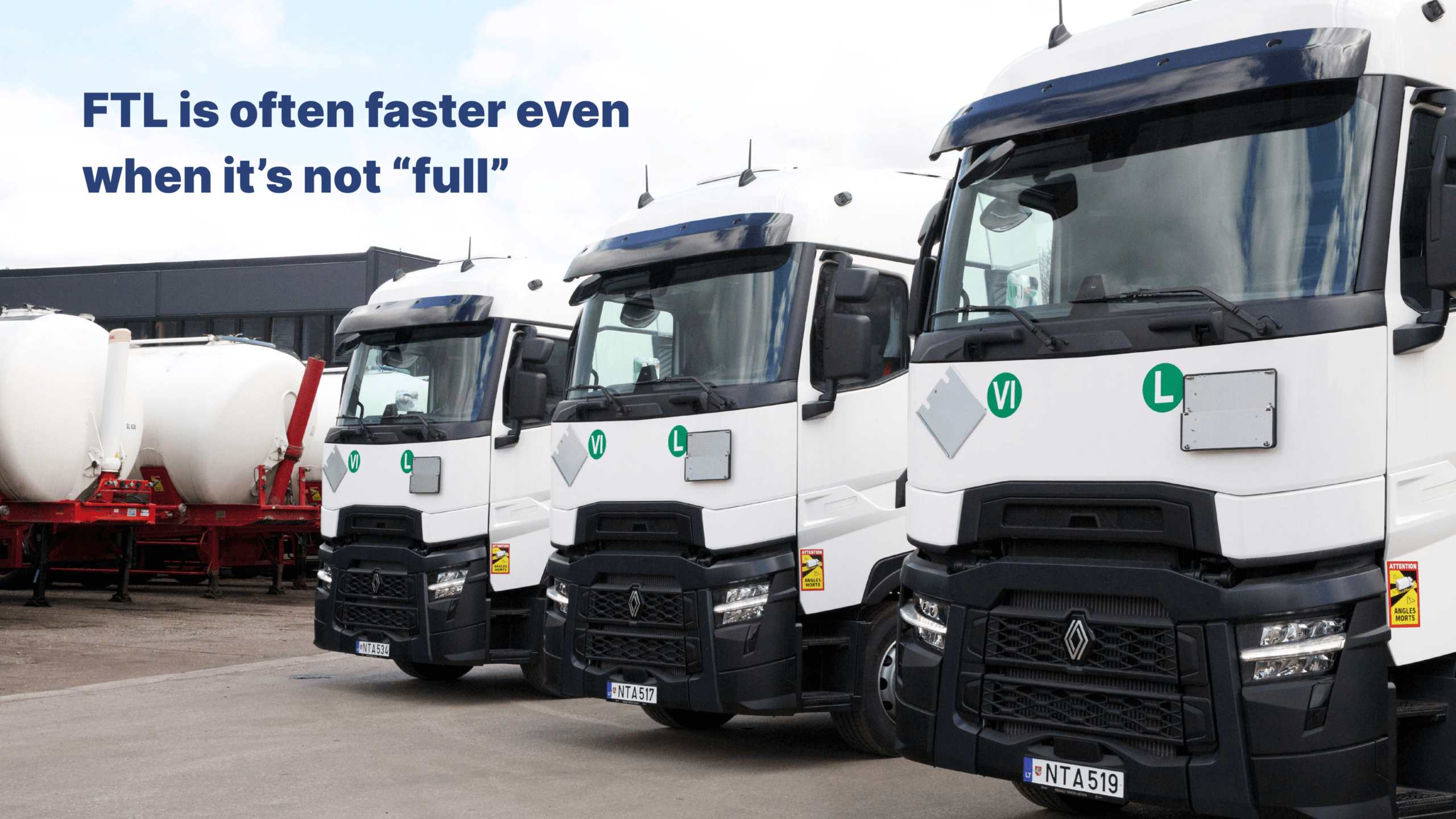
FTL is often faster even when it’s not “full”
A lot of companies assume FTL only makes sense when the trailer is completely filled. In reality, many experienced operators choose FTL even at 70–80% capacity. Why? Because FTL removes the biggest hidden cost in transport: handling complexity.
With FTL:
– No cross-docking
– No terminal transfers
– No reloading between hubs
– No mixing with other customers’ cargo
That means:
– Lower damage risk (fewer touches)
– Shorter transit time (direct route)
– Higher predictability (no dependency on consolidation schedules)
Compare that to LTL:
– Multiple stops
– Freight gets handled several times
– Delays compound across the network
The counterintuitive part
In some cases, a “partially empty” FTL shipment can actually be:
– Cheaper overall (when you factor in claims, delays, admin)
– More reliable for time-sensitive cargo
– Preferred for high-value goods, even if space is unused
What top logistics teams do differently
They don’t ask: “Can we fill the truck?”, they ask: “What is the cost of risk, delay, and handling?”
That shift in thinking is what separates basic transport planning from optimized logistics operations.
Related posts

The industry that keeps the world moving
Long before we spoke about supply chains, KPIs, or 3PLs, logistics was already s

Good transport managers are a bit like ninjas
Many companies view logistics providers simply as transport and warehousing part

Why FTL solutions are fueling the next era of supply chain efficiency?
In today’s fast-moving logistics landscape, shippers are looking for reliabili